FTC Zağanos #25577 Won
FIRST Tech Challenge team. FTC Türkiye Champions, the Control Award, and the Reach Award at the FIRST Championship in Houston.
- Role
- Software mentor (2025–26) · team lead (2026–27)
- Period
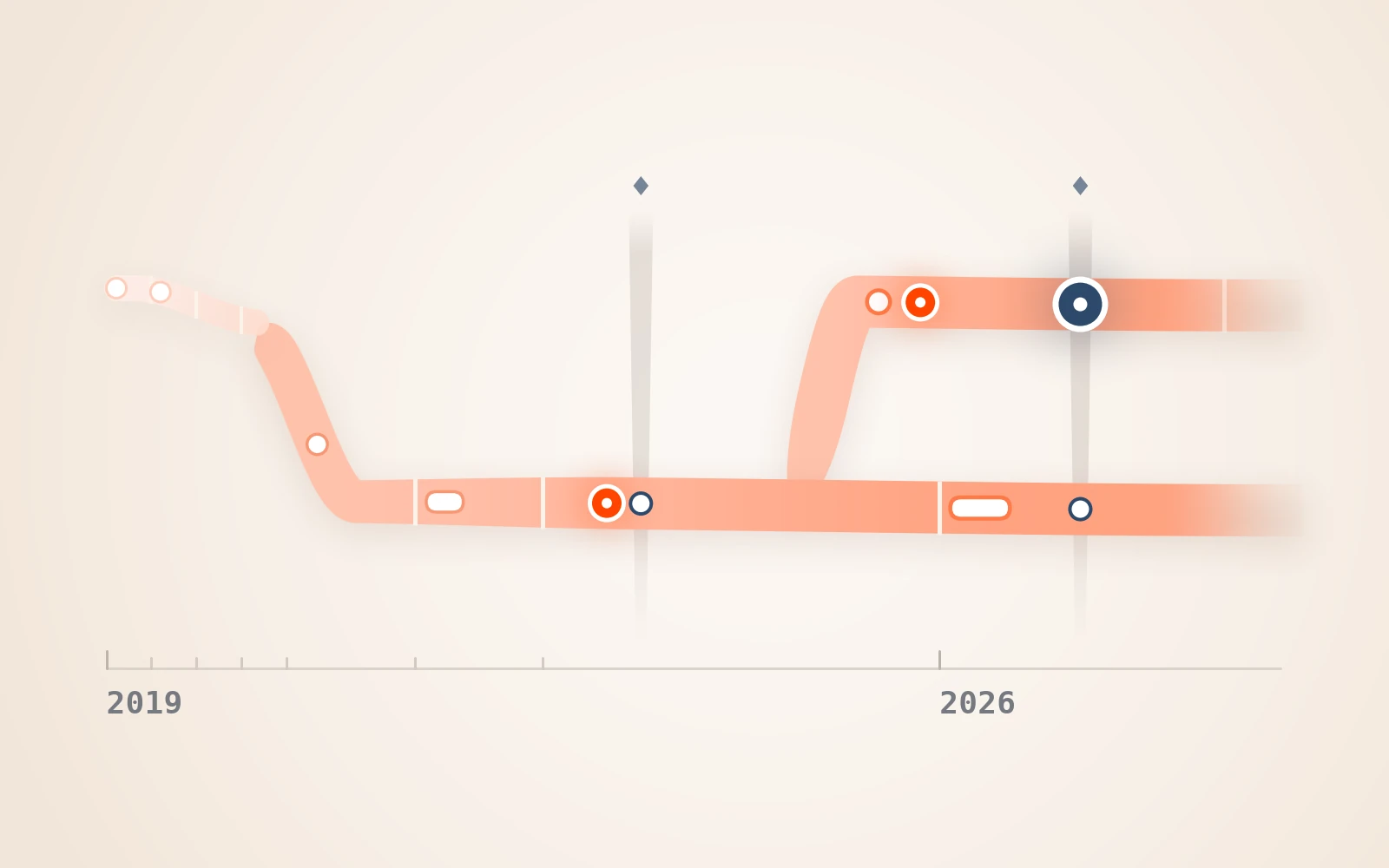
- 2025–
- Team
- FTC #25577
- Stack
- Java · FTC SDK · Python · PyBullet
- Impact
- FTC Türkiye Champions · Reach Award in Houston
Why
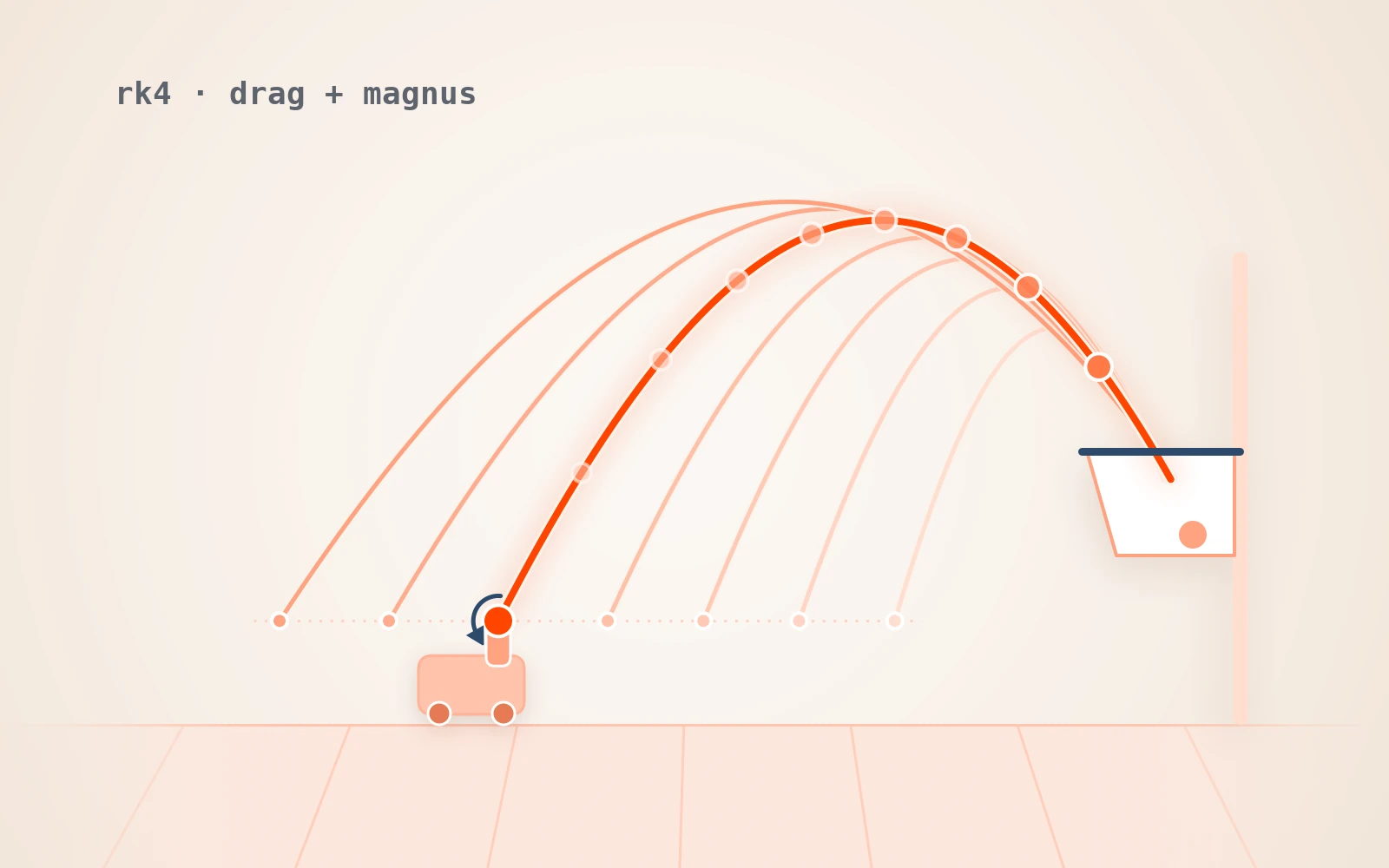
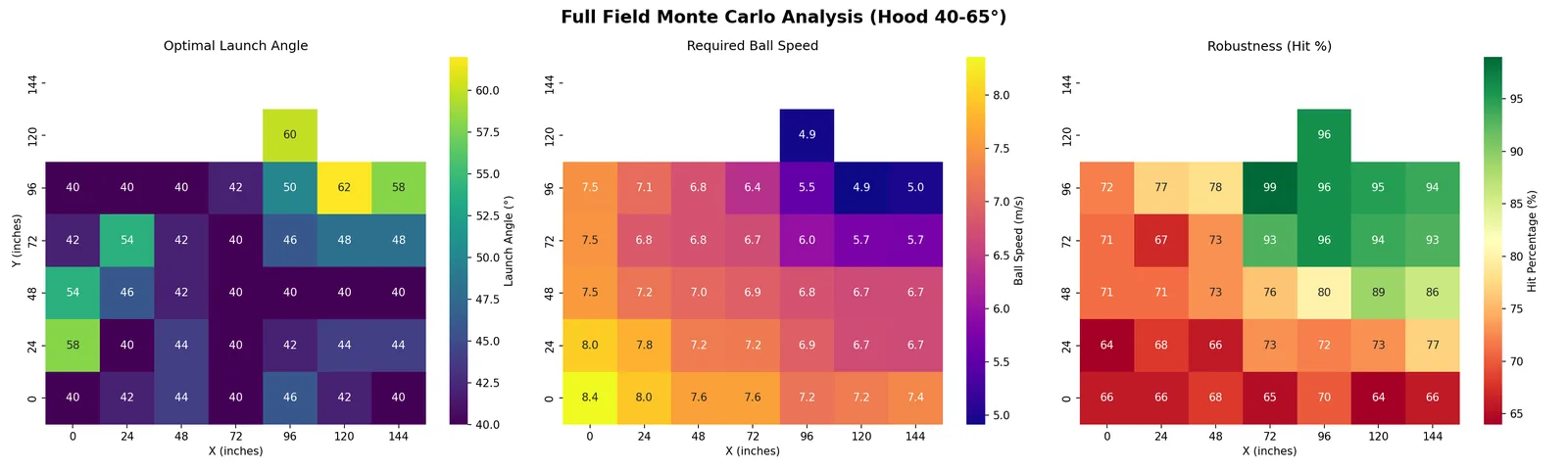
DECODE was a shooting game, and a setting that scores from one spot misses from another, so the robot needed a flywheel speed and hood angle for any distance to the goal. That is why the shooter work started from measured ball flights. This season the software is built in phases: every phase has to end with a robot that drives, and if a newer logic engine breaks, the robot can switch back to an older one by changing one line.
What I did
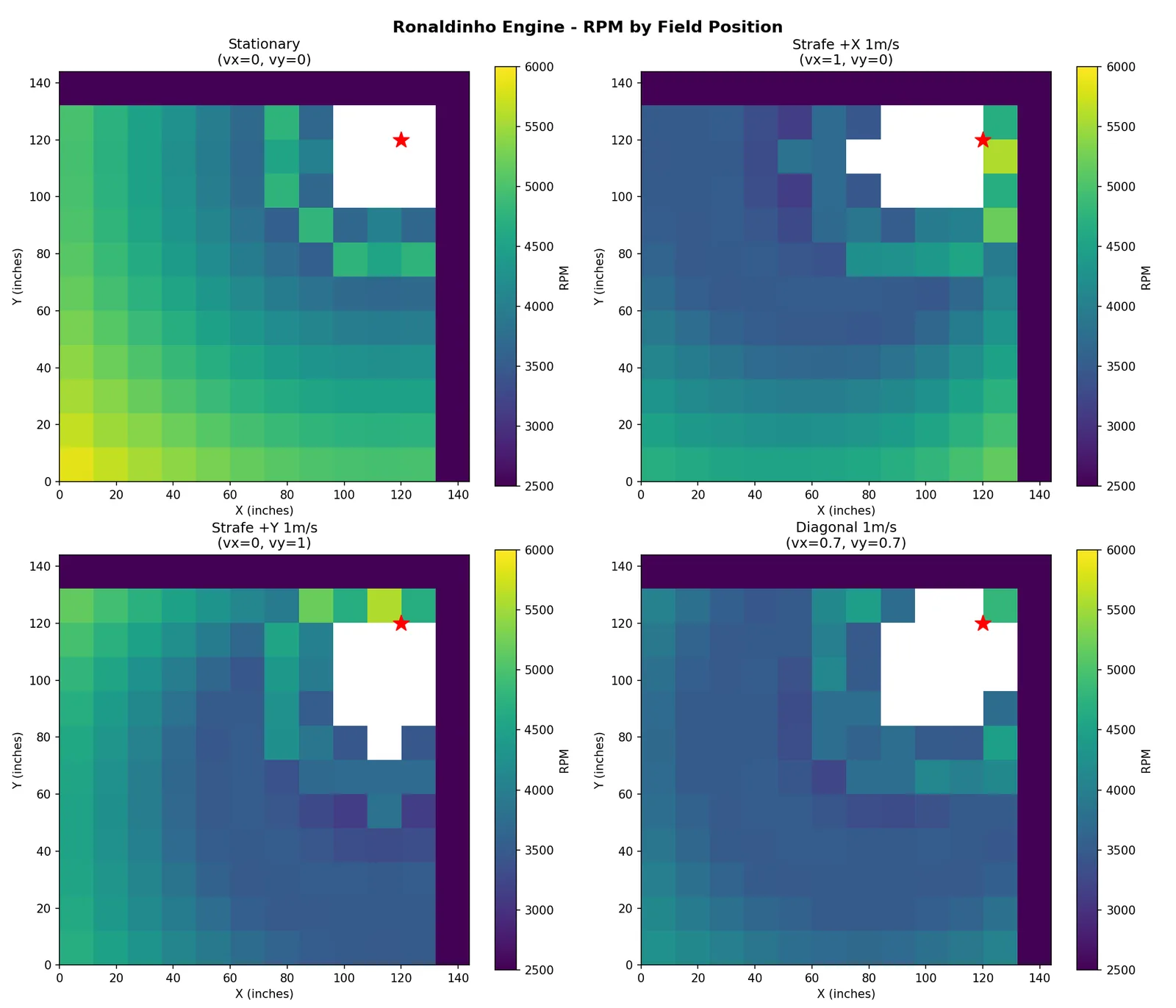
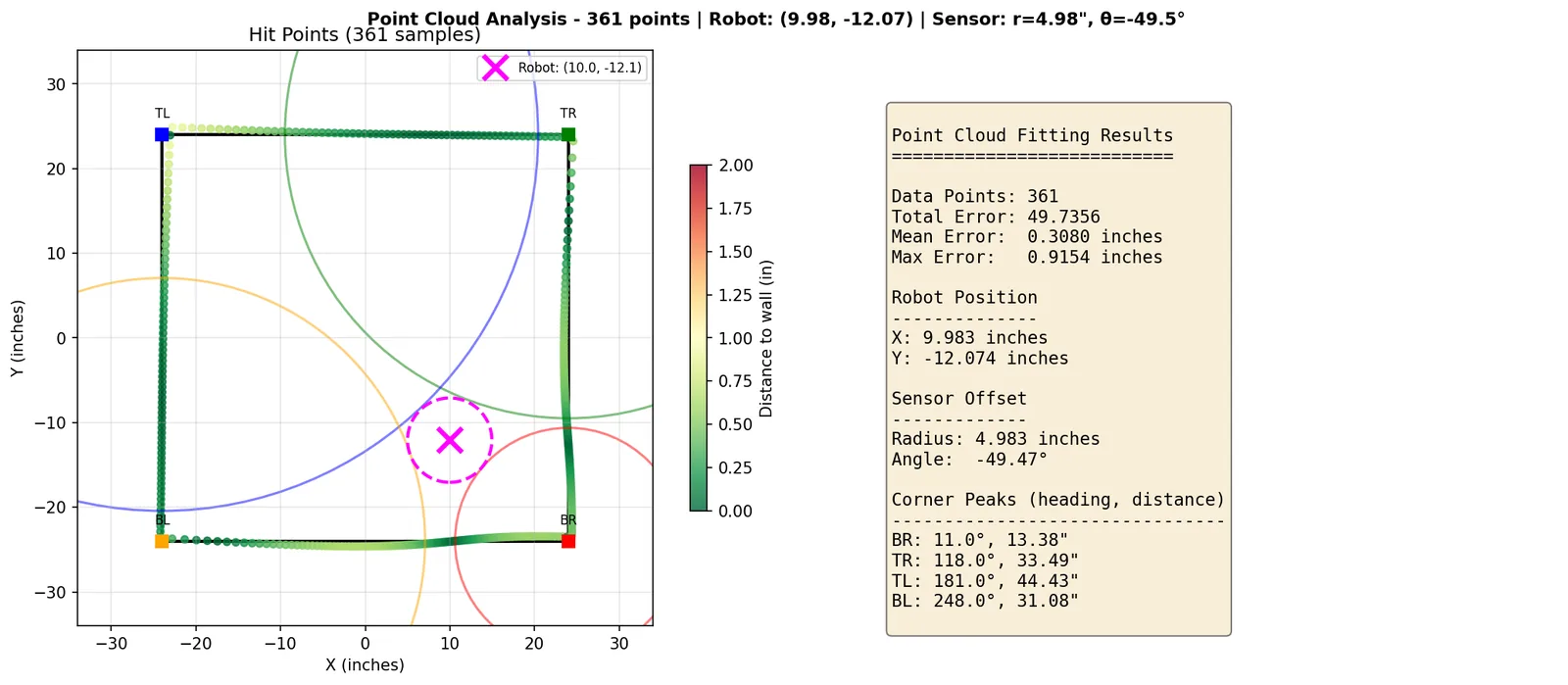
DECODE (2025–26), as software mentor. The robot code was written by coding agents that I direct and review. For the shooter that meant a pipeline: ball trajectories pulled from high-speed video, drag and spin coefficients fitted to them, and shot solutions exported to the robot as Java. On the robot, a solver picks flywheel speed and hood angle from the distance to the goal, and the turret fuses two encoders with a Kalman filter. The robot code also ran in a PyBullet simulator, so we could debug it before the mechanics were done.
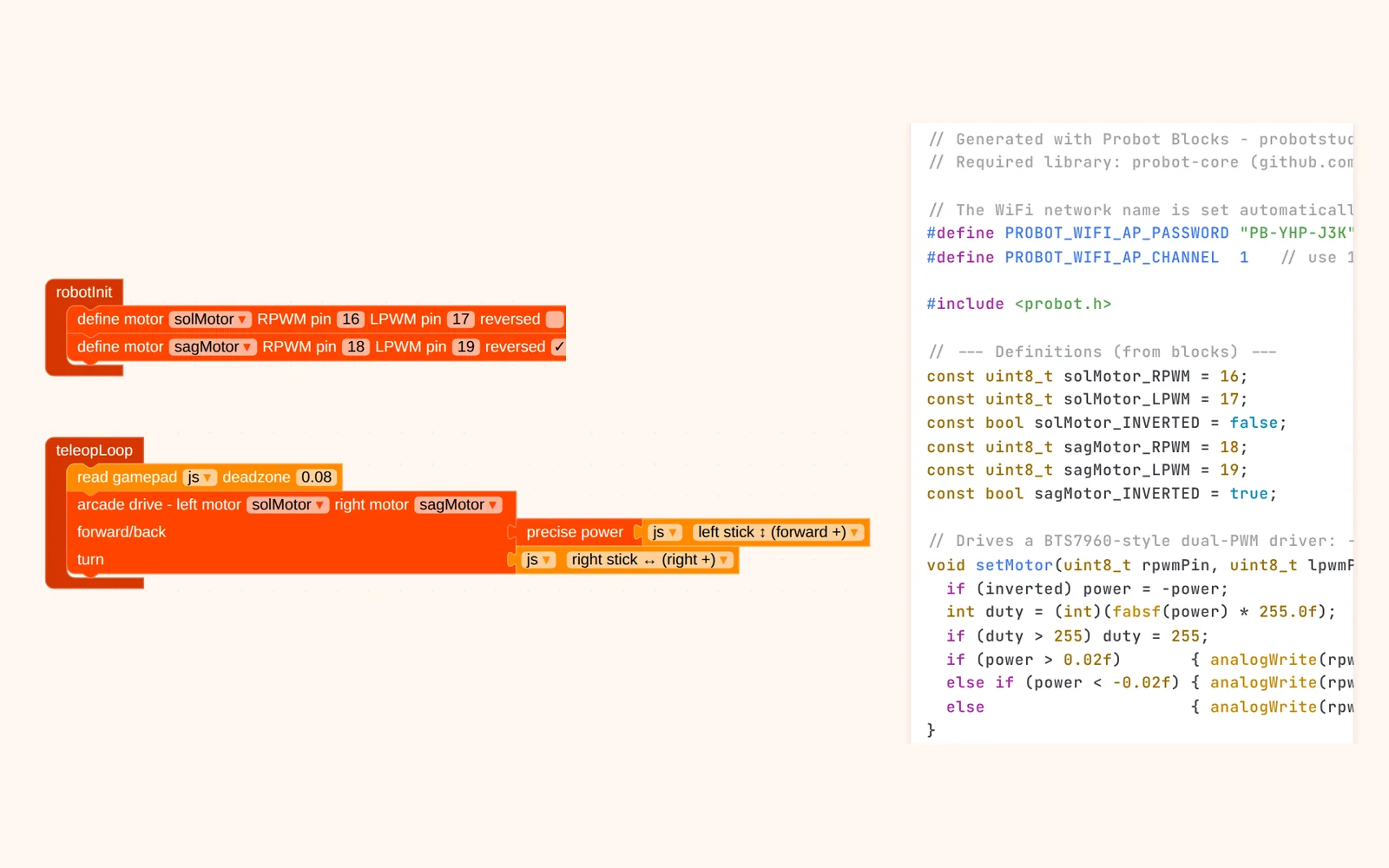
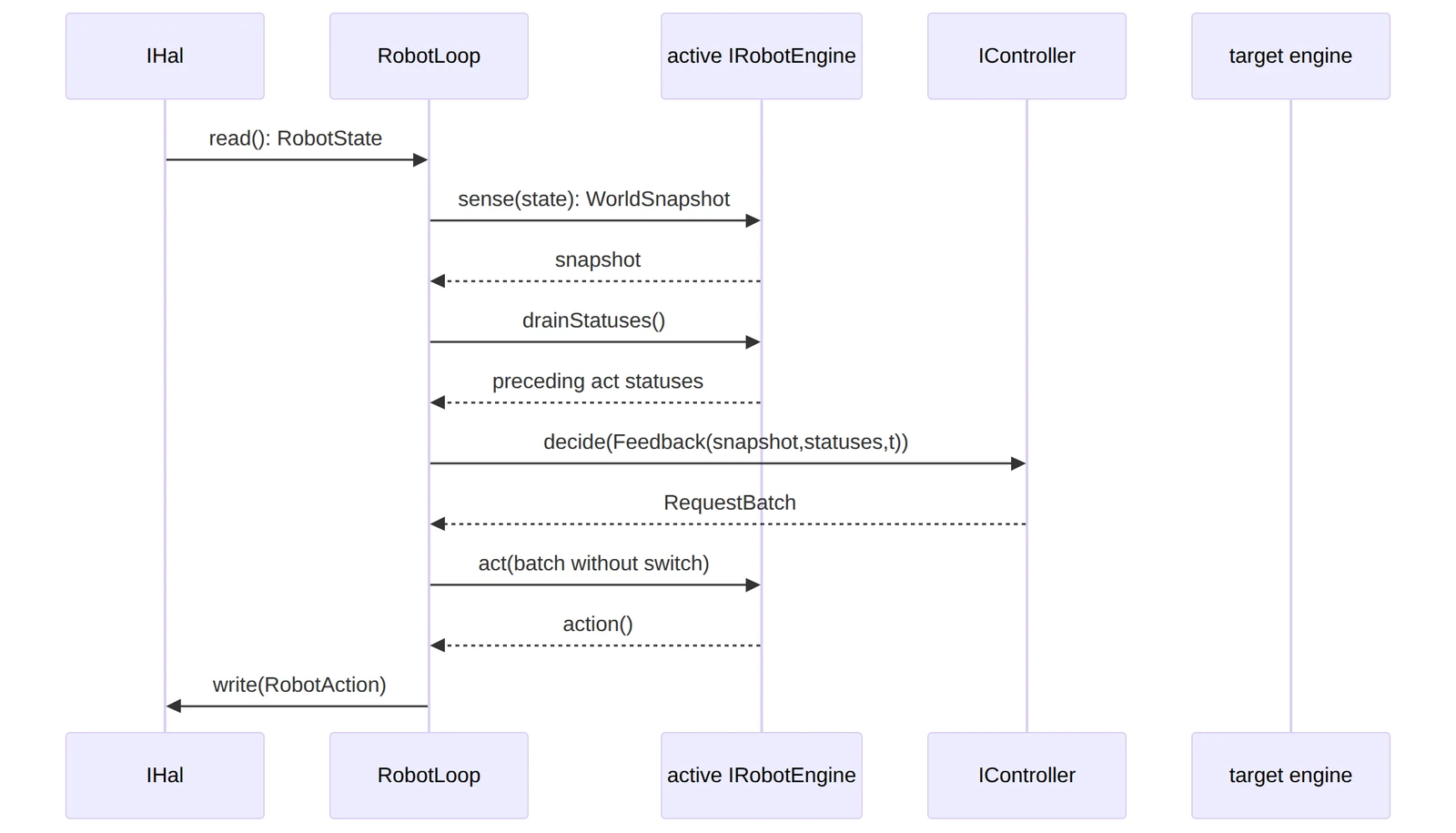
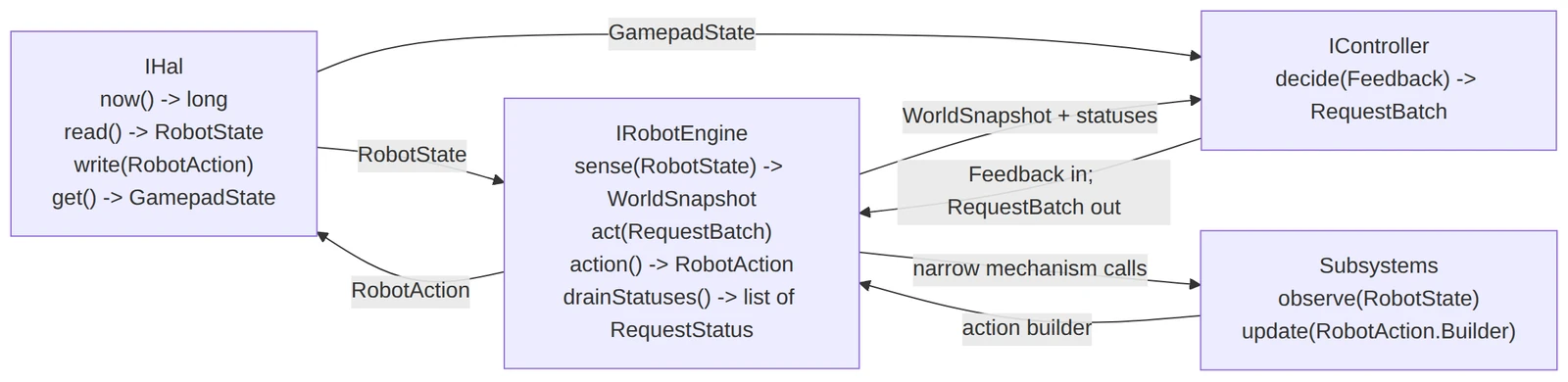
This season (2026–27), as team lead. I designed the new robot software: a core that never touches hardware (the build enforces it), swappable decision logic, and a deterministic Python simulator that runs in lockstep with the robot code and can replay a match. Again the code is written by coding agents that I direct and review, against specs I approve.
Results
We won the FTC Türkiye Championship in December 2025 as the winning alliance captain, together with the Control Award for software. Earlier in the season we won the Innovate Award at two qualifiers. At the FIRST Championship in Houston we won the Reach Award.
Gallery
Next
At the last update of the design docs (September 2026) the new software had passed its skeleton phase and was in phase one, where the layers and path following are tested in the simulator first. The plan then adds the shooter, intake and turret, vision, and a world model one engine at a time, with a shooter that starts from a single fixed shot and moves to measured tables. The team's process notes are written in Turkish, and an English summary for Chief Delphi is planned.